We use cookies to make your experience better. To comply with the new e-Privacy directive, we need to ask for your consent to set the cookies. Learn more.

IP vs Analogue Door Entry: A Practical Guide for Installers


Posted:
April 23, 2026
Categories:
Educational articles

IP versus analogue? Let's talk. The honest answer is that neither system is universally better, and anyone who tells you otherwise is selling you something. The right call depends entirely on the project, and getting it wrong means callbacks, snagging lists, and conversations nobody wants to have. Here's how to get it right the first time.
What Is the Difference Between IP and Analogue Door Entry?
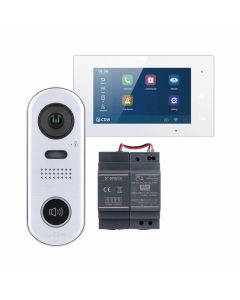
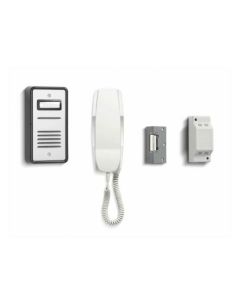
IP door entry systems transmit signals as data packets over a network using Cat5e or Cat6 cabling, enabling remote access, multi-site management, and integration with wider IT infrastructure. Analogue systems transmit audio and video over dedicated cable runs, typically 2-wire or 4-wire, without requiring network configuration. The right choice depends on the project requirements, not a preference for newer technology.
What Analogue Door Entry Is Best For
Analogue gets a bad reputation it doesn't deserve. Yes, IP is where the industry is heading, but that doesn't make analogue obsolete, and it certainly doesn't make it the wrong choice for a huge proportion of the jobs you'll quote on this year.
For retrofits in existing residential buildings where the cable infrastructure is already in place, analogue is almost always the smarter call. Rewiring for IP adds cost and disruption that the project simply doesn't justify. Analogue systems are faster to install, easier to troubleshoot on site, and they don't need a well-managed network to perform reliably, which matters more than you'd think on sites where the IT infrastructure is an afterthought. For smaller developments and straightforward residential jobs, analogue does one thing and does it well.


What IP Door Entry Is Best For
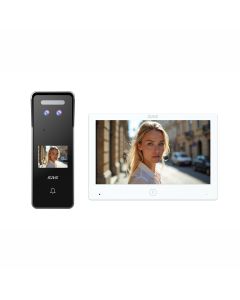
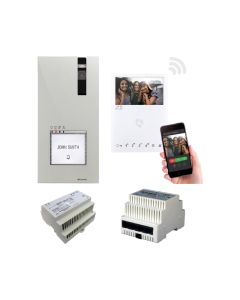
IP earns its place on new builds, larger residential developments, and any project where remote management, scalability, or integration with wider access control infrastructure is a genuine requirement, not just a nice to have. Because IP runs over network infrastructure, expanding the system later becomes a very different conversation compared to pulling additional cable runs through a finished building. On phased developments or multi-site managed estates, that flexibility is genuinely valuable.
Cloud-based access control, smartphone entry, and building management system integration are all significantly easier over IP, so if your client is thinking beyond today's brief, IP is the architecture that supports where they're going.


The Questions to Ask Before You Quote
The right system almost always becomes obvious once you ask the right questions at the survey stage rather than defaulting to a habit. Is it a retrofit or new build? Does the client need remote access or multi-site management? How well managed is the site's network infrastructure? What are the budget and future-proofing expectations? Installers who have this conversation before they quote avoid the vast majority of specification headaches before they start, because by the time the main contractor asks, you already have the answer.
Part M Considerations for Both System Types
Whichever system you specify, Part M compliance applies to how controls are positioned and mounted rather than the technology behind them. External door entry controls must be mounted between 900mm and 1000mm above finished ground level and set back a minimum of 300mm from any external return corner. It applies to both systems equally, and building control will check it on both. For a full breakdown read our [Part M Building Regulations guide →].
When the Panel Needs to Fit the Spec
Sometimes the project demands more than an off-the-shelf panel offer. Design your panel quickly and accurately using our online panel designer at vrpanels.com. Upload logos, customise text, and preview your finished panel instantly before submitting directly to production, eliminating delays and errors.
For more complex projects where every detail needs to be built around the spec, our fully bespoke service gives you complete control over sizes, cut-outs, layouts, finishes, and engraving, including Braille for accessibility compliance.
Specifying With Confidence
Ask the right questions early, match the system to the brief, and the job runs cleanly from survey to sign-off with no surprises and no snagging.
Recent Posts


